
More Indians start car shopping online, pushing automakers and dealers to respond quickly, train staff, and use AI to turn clicks into showroom visits.

Electric passenger vehicle (PV) retail sales jumped more than twofold in September with Tata Motors (TaMo) leading the pack having over 6,000 registrations and a 40 per cent market share.

After a record-breaking year, India's automobile industry is entering 2026 on a relatively strong footing, with sales growth expected in the 6-8 per cent range. The outlook is underpinned by policy support, including GST rationalisation, easing monetary conditions, and income tax relief, which together are likely to improve affordability and sustain consumer demand across vehicle segments.
Total vehicle retail sales in India rose 27 per cent year-on-year to 22,06,070 units in April as all segments, including passenger vehicles and two-wheelers, witnessed growth, industry body FADA said on Wednesday. The overall vehicle registrations stood at 17,40,649 units in April 2023. Passenger vehicle retail sales rose 16 per cent to 335,123 units last month as compared to 289,056 units in the same month last year.

Passenger vehicle retail sales witnessed 3 per cent on-year decline in May with customers delaying purchases in several states due to India-Pakistan conflict and further softening of demand for entry-level models, dealers' body FADA said on Friday. The passenger vehicle registrations last month stood at 302,214 units, as compared to 311,908 units in May 2024.

While GST on ICE vehicles was brought down significantly, for electric cars it remained at 5 per cent.

Passenger vehicle retail sales shot up 35 per cent year-on-year during the nine-day Navratri period this year, helping the overall registrations last month grow 6 per cent, as offtakes remained muted in the first 21 days of the month and only took off after the roll-out of new GST rates on September 22, dealer' body FADA said on Tuesday.

Retail sales of vehicles across categories in India grew by 11.21 per cent at 32,08,719 units in November, as compared to 28,85,317 units in the same month last year riding on two-wheeler demand, Federation of Automobile Dealers Associations said in Monday. Retail sales of two-wheelers were at 26,15,953 units last month, as compared to 22,58,970 units in November 2023, a growth of 15.8 per cent buoyed by the festive spillover.

The two-wheeler industry was hit by an increase in insurance rates, liquidity crunch, poor sentiment, rural distress and uncertainty over the BS-VI regulations, among other factors.

Retail sales of passenger vehicles grew last month but the sales of two-wheeler and commercial vehicles remained low compared to the pre-COVID month of May 2019, according to automobile dealers' body FADA. On Monday, FADA said that overall auto retails stood at 16,46,773 units in May, down from 18,22,900 units in May 2019. "May 2022 retails when compared to May 2019 reveal that sales are still not on a growth trajectory as overall retails were down by 10 per cent.

Auto sales have been declining for 13 straight months as a broader slowdown in the economy has crippled demand across the country.

Vinfast sold 137 cars versus Tesla's 109 during the festive months of September and October, as BYD maintained a strong lead with over 1,100 cars sold, according to Fada data.

Customers who have already booked earlier variants will also have the option to upgrade to the 79 kWh battery version.
Retail sales of automobiles in India grew 8.31 per cent in August this year on the back of increase in registrations of vehicles across all major segments, automobile dealers' body FADA said on Thursday. As per data released by the Federation of Automobile Dealers Associations (FADA), total vehicle retail sales in the country stood at 15,21,490 units last month as compared to 14,04,704 units in August 2021. Passenger vehicles (PV) retail sales stood at 2,74,448 units as compared to 2,57,672 units in the year-ago month, a growth of 6.51 per cent.

Long standing number two passenger vehicle maker in India, Hyundai Motor India, has slipped to fourth position in the domestic market in terms of retail sales last month behind Maruti Suzuki India, Mahindra & Mahindra and Tata Motors, as per the latest data shared by dealer's body FADA. Hyundai Motor India clocked retail sales of 38,156 units last month, a dip of 20 per cent as compared with 47,540 units in February last year.

Fada estimates that global supply chain headwinds like scarce availability of rare earth elements for electric vehicle components and geopolitical tensions may affect urban consumer sentiment in June as well.
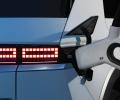
India may see its busiest EV festive season in 2025 with SUVs, luxury cars and scooters set to launch, but rare-earth supply bottlenecks risk delaying rollouts.

Lenders have become worried as some dealers were not using the money provided to them for car financing.
Spreading risks in sourcing raw materials for electric vehicle (EV) manufacturing is "very critical" and the government can play a key role by enabling access to these from multiple locations worldwide, said Vivek Srivatsa, chief commercial officer at Tata Passenger Electric Mobility, on Friday while stressing the need for faster localisation, especially of batteries.

Dealers say the significant increase in sales was driven by a need to plug the diminishing inventory as most dealerships were transitioning from BS-IV to BS-VI when the Covid-19 lockdown was announced.
Retail sales of passenger vehicles - the largest component of the pie - jumped 11 per cent year-on-year in October to 248,036 units, largely because of discounts offered during Navratri and Diwali.

Electric vehicle sales registered a 55.2 per cent on-year growth at 1,79,038 units in July driven by a massive 96 per cent jump in e-two-wheeler sales, automobile dealers' body FADA said on Tuesday. The total electric vehicles sales for July 2023 were at 1,16,221 units, according to the monthly sales data from Federation of Automobile Dealers' Association (FADA).

Automobile retail sales grew 9 per cent year on year in 2024 riding on the back of robust demand for two-wheelers and passenger vehicles amid challenging business environment, dealers' body FADA said on Tuesday. Overall vehicle registrations stood at 2,61,07,679 units last year as compared to 2,39,28,293 units in the 2023 calendar year, recording a growth of 9 per cent.

Dealers said the discounts this March are higher than the same month in the previous year.

Manufacturers of passenger vehicles (PVs) in the first half of the calendar year (2025) reported a modest 0.5 per cent year-on-year increase in wholesale dispatches, while retail sales grew 2.5 per cent for the same period, reflecting a calibrated approach by automakers amid elevated dealership inventories and cautious consumer sentiment. According to the Society of Indian Automobile Manufacturers (Siam), dispatches rose marginally to 2.16 million units, up from 2.15 million units a year earlier.

The meltdown in Dalal Street that wiped out investor wealth to the tune of 44 trillion in 2025 also seems to be having a ripple effect on the country's vibrant automobile retail sales.

Retail sales of electric passenger vehicles (ePVs) nearly doubled in July 2025, surging 93 per cent year-on-year (Y-o-Y) to 15,528 units, even as overall passenger vehicle (PV) retail volumes declined marginally. In contrast, electric two-wheeler (e2W) sales dropped by 4.3 per cent to 102,973 units, according to the Federation of Automobile Dealers Associations (Fada) data.

Siam argues that a 2040 ban could destabilise ongoing and future investments and threaten millions of jobs in the automotive value chain.

The total vehicle retail sales in India witnessed a 32 per cent on-year rise in October to 28,32,944 units with all segments including two-wheelers and passenger vehicles registering strong growth, Federation of Automobile Dealers' Association (FADA) said on Wednesday. The total vehicle retail sales in October 2023 stood at 21,43,929 units, as per FADA. The strong growth in October this year was largely driven by the rural market, especially boosting two-wheeler and passenger vehicles sales, supported by increased Minimum Support Price (MSP) for Rabi crops, FADA said.
Top executives from Siam and major carmakers recently met with Heavy Industries Secretary Kamran Rizvi to discuss the matter. Officials from NITI Aayog were also present.

The muted expectation of dealers come at a time when vehicle manufacturers such as Maruti Suzuki, Hyundai Motor, Mahindra & Mahindra and others reported a double-digit fall in wholesale dispatches to dealerships in July and August.

Hero MotoCorp is expecting its electric vehicle (EV) business to break even once it reaches monthly sales volumes of 25,000 to 30,000 units, which is a couple of years away, Chief Financial Officer (CFO) Vivek Anand said on Tuesday. "This year, in 2024-25 (FY25), if I really look at my EV performance, our volumes have grown by 200 per cent," Anand told analysts during the company's post-results conference call.

Auto mobile retail sales in India witnessed a 10 per cent annual growth in July driven by robust sales across passenger vehicles, two-wheelers and commercial vehicles, industry body FADA said on Monday. Total retail sales across segments rose to 17,70,181 units last month, as compared to 16,09,217 units in July 2022. Passenger vehicle sales saw an increase of 4 per cent to 284,064 units last month, as compared to 273,055 units in the year-ago period, the Federation of Automobile Dealers Associations (FADA) said in a statement.

'The slowdown in motor insurance premium growth is due to slower growth in vehicle sales. Also, there has been minimal hike in third-party rates in the past three years which is affecting the growth rate of third-party premiums.'
Passenger vehicle retail sales in India witnessed a 5 per cent on-year decline in August on account of delayed customer purchases, poor consumer sentiment and persistent heavy rains, industry body FADA said on Thursday. The overall passenger vehicle (PV) registrations last month stood at 309,053 units, as compared to 323,720 units in August 2023.

Automobile retail sales in India declined 9 per cent year-on-year in September amid a massive buildup of passenger vehicle inventory due to sluggish demand, dealer's body FADA said on Monday, urging original equipment manufacturers to take corrective steps. The overall registrations declined to 17,23,330 units last month from 18,99,192 units in September 2023, as most of the categories including passenger vehicles and two-wheelers witnessed a year-on-year (Y-O-Y) drop.
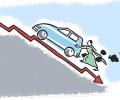
The only silver lining in March's performance -- which otherwise dragged down the financial year's momentum -- was a 6 per cent year-on-year (Y-o-Y) growth compared to March of the previous year. This is largely due to incentives, festival-driven gains, and new launches.

Passenger vehicle retail sales in India declined by 1 per cent last month as buyers preponed purchases to March in order to avoid enhanced prices on account of stricter emission norms kicking in from April 1, automobile dealers' body FADA said on Thursday. The passenger vehicle retail sales declined to 282,674 units last month as compared with 286,539 units in April 2022. "The passenger vehicle segment, which achieved record sales in FY23, slowed down in April... This was primarily due to last year's high base and the OBD 2A norms, which led to vehicle price increases and advanced purchases in March," Federation of Automobile Dealers Associations (FADA) president Manish Raj Singhania said in a statement.

Automobile (auto) retail sales in India grew by an impressive 14 per cent in July compared to the same period last year, driven by a surge in the rural economy, good product availability, and product launches. While passenger vehicles (PVs) saw a 10 per cent increase during this period, inventory levels have surged to a historic high of 67-72 days in PVs, equating to Rs 73,000 crore worth of stock, according to the Federation of Automobile Dealers Associations (Fada). This poses a risk to dealer sustainability. Inventory levels in July 2023 were only 50-55 days, equating to a stock worth Rs 49,833 crore. In June 2024, inventory was between 62 and 67 days, with a stock value of Rs 60,000 crore.

As there is a moderation in car sales, dealer stock levels across the entire industry have surged to alarming heights. However, the situation is under control at HMIL.
